
NXP PRF949: A Comprehensive Overview of its Architecture and Automotive Applications
The relentless drive towards smarter, safer, and more connected vehicles has necessitated the development of highly sophisticated and reliable electronic components. At the heart of many modern automotive systems lies the NXP PRF949, a highly integrated System-in-Package (SiP) solution designed to meet the stringent demands of the automotive industry. This device exemplifies the convergence of radio frequency (RF) technology, microcontrollers, and security in a single, compact package.
Architectural Deep Dive
The NXP PRF949 is not a single chip but a sophisticated multi-chip module (MCM) that integrates several critical components into a single 32-pin HVQFN package. Its architecture is a testament to system-level integration, primarily built around:
The S32K144 Microcontroller: This is the brain of the package. The S32K144 is an ARM Cortex-M4F based MCU, part of NXP's S32K family of automotive-grade general-purpose microcontrollers. It provides the processing power for application code, network management, and interface handling.
The NXP SBC (System Basis Chip): A key enabler for space-constrained designs, the integrated System Basis Chip provides power management, network interfaces (like CAN FD), and supervisory functions. It supplies regulated voltages to the MCU and other components, monitors system health, and enhances overall reliability.
The TJA146x CAN FD Transceiver: This component handles the physical layer communication on the Controller Area Network Flexible Data-rate (CAN FD) bus. It is responsible for converting the digital signals from the MCU into robust differential signals for transmission over the vehicle's network and vice versa.
The NXP RF Transmitter: This is the core RF element, a high-performance UHF ASK/FSK transmitter capable of operating in the 315 MHz, 434 MHz, and 868 MHz frequency bands. It is designed for extremely low power consumption in standby modes while providing sufficient output power for robust wireless communication.
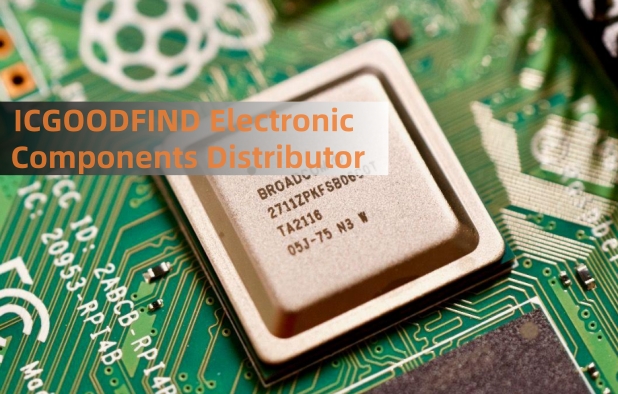
This SiP architecture significantly reduces the PCB footprint, simplifies design complexity, minimizes RF engineering challenges, and accelerates time-to-market for automotive manufacturers.
Pivotal Automotive Applications
The integration of a powerful MCU, a CAN FD interface, and a robust RF transmitter makes the PRF949 uniquely suited for a range of telematics and passive entry systems.
1. Remote Keyless Entry (RKE) Systems: The PRF949 is an ideal solution for next-generation smart keys and fobs. Its low-power capabilities ensure long battery life, while the integrated MCU can handle advanced encryption algorithms for enhanced security, preventing relay attacks. The RF transmitter sends lock/unlock and trunk release commands to the vehicle.
2. Passive Entry Passive Start (PEPS) Systems: In PEPS systems, the key fob communicates with the car to enable keyless entry and engine start. The PRF949's ability to be woken up via an LF signal from the car and its capability to respond via UHF transmission is fundamental to this hands-free operation. The integrated MCU can manage the challenge-response authentication protocols securely.
3. Tire Pressure Monitoring Systems (TPMS): While often battery-less, some advanced TPMS sensors can benefit from this level of integration. The MCU can process data from pressure and temperature sensors, and the RF transmitter can send this data wirelessly to the vehicle's receiver unit, often using the 434 MHz band.
4. Telematics Control Units (TCUs) and V2X Modules: For small form-factor modules requiring wireless firmware updates (FOTA) or vehicle-to-everything (V2X) communication, the PRF949 can serve as a low-power auxiliary communication link alongside primary cellular modems.
ICGOOODFIND
The NXP PRF949 is a quintessential System-in-Package (SiP) solution that masterfully combines processing, connectivity, and wireless communication. Its value proposition lies in its ability to drastically reduce design complexity and PCB space while delivering the performance, security, and reliability mandated by the automotive sector. It is a key enabler for the proliferation of advanced passive entry and telematics features, making it a critical component in the architecture of the modern automobile.
Keywords: System-in-Package (SiP), Automotive Applications, Passive Entry Passive Start (PEPS), CAN FD, RF Transmitter

