Microchip KSZ8081RNDCA-TR: A Comprehensive Overview of the Single-Chip 10/100Mbps Ethernet PHYceiver
In the realm of embedded networking, the physical layer (PHY) transceiver is a critical component that bridges the digital world of a microcontroller or processor with the analog domain of Ethernet cabling. The Microchip KSZ8081RNDCA-TR stands out as a highly integrated, single-chip solution designed to provide robust 10BASE-T and 100BASE-TX Ethernet connectivity for a wide array of applications. This article delves into the key features, architecture, and application strengths of this versatile PHYceiver.
Core Architecture and Functionality
The KSZ8081RNDCA is a highly integrated mixed-signal analog/digital CMOS device. Its core function is to implement the entire physical layer portion of the 10/100Mbps Ethernet standard. It features a fully compliant IEEE 802.3u standard interface, ensuring interoperability with other network equipment. The chip incorporates both the physical coding sublayer (PCS) and physical medium attachment (PMA) sublayers, handling essential tasks like data encoding/decoding (e.g., 4B/5B, MLT-3), scrambling/descrambling, and analog signal generation and reception.
A key interface for this device is the Media Independent Interface (MII) or Reduced Media Independent Interface (RMII), which connects to a Media Access Control (MAC) controller embedded within a host microcontroller, microprocessor, or FPGA. This flexibility allows designers to choose the interface that best suits their system's needs and available pin count.
Key Features and Technical Advantages
1. Low Power Operation: The device is engineered for power-sensitive applications, supporting advanced power-down modes. This includes a software power-down mode and an energy-detect power-down mode, which significantly reduces power consumption when the Ethernet cable is unplugged.
2. Integrated Termination Resistors: The KSZ8081RNDCA incorporates on-chip termination resistors for the differential pairs. This design choice reduces the external bill of materials (BOM), saves board space, and simplifies PCB layout—a crucial advantage for compact designs.
3. Robust Signal Integrity: It boasts excellent ESD protection performance (≥ 6kV HBM on cable pins), enhancing the reliability and durability of the end product in harsh electrical environments. Advanced DSP-based adaptive equalization ensures stable link performance over various cable qualities and lengths.
4. Comprehensive Diagnostic Capabilities: The PHY offers extensive loopback functions (both internal and external) for effective system-level debugging and testing. It also provides detailed link status and activity monitoring, aiding in troubleshooting.
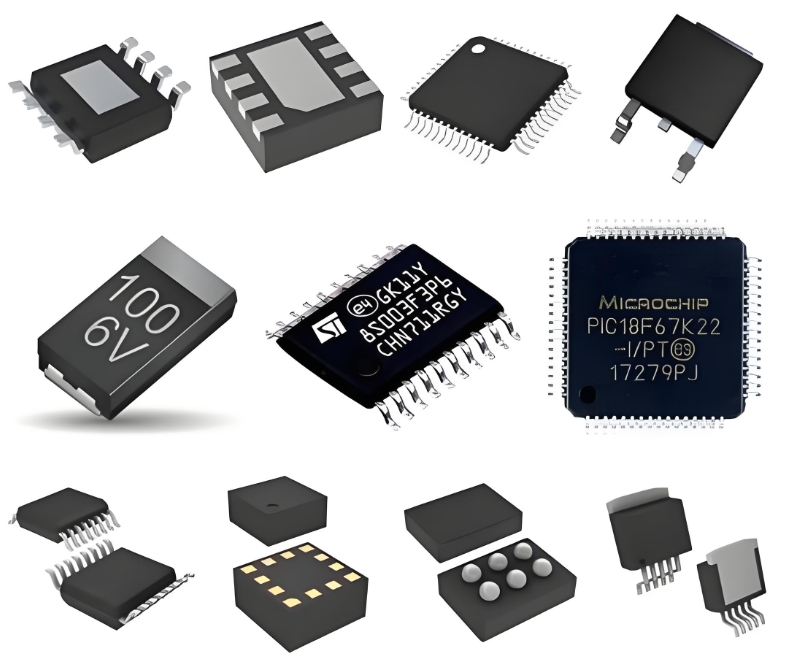
5. Package and Temperature Range: Housed in a compact, lead-free 24-pin QFN package, it is suitable for space-constrained designs. The part is specified for the industrial temperature range (-40°C to +85°C), making it ideal for industrial automation, building control, and outdoor applications.
Target Applications
The combination of its small form factor, low power, and industrial robustness makes the KSZ8081RNDCA-TR an excellent choice for a diverse set of markets:
Industrial Control Systems: PLCs, motor drives, and sensor gateways.
Consumer Electronics: Smart TVs, set-top boxes, and gaming consoles.
Embedhed Computing: System-on-Modules (SoMs), single-board computers (SBCs), and network-enabled embedded boards.
Internet of Things (IoT): IoT gateways and connected devices requiring reliable wired network connectivity.
The Microchip KSZ8081RNDCA-TR is a highly reliable and cost-effective Ethernet PHY solution that successfully balances performance, integration, and power efficiency. Its adherence to industry standards, coupled with features like integrated termination and robust diagnostics, simplifies design-in and accelerates time-to-market for developers. For engineers seeking a proven single-chip 10/100Mbps PHY for industrial and consumer applications, this device represents a compelling and versatile option from a trusted semiconductor manufacturer.
Keywords:
Ethernet PHY, IEEE 802.3u, Low Power, Industrial Temperature, MII/RMII

